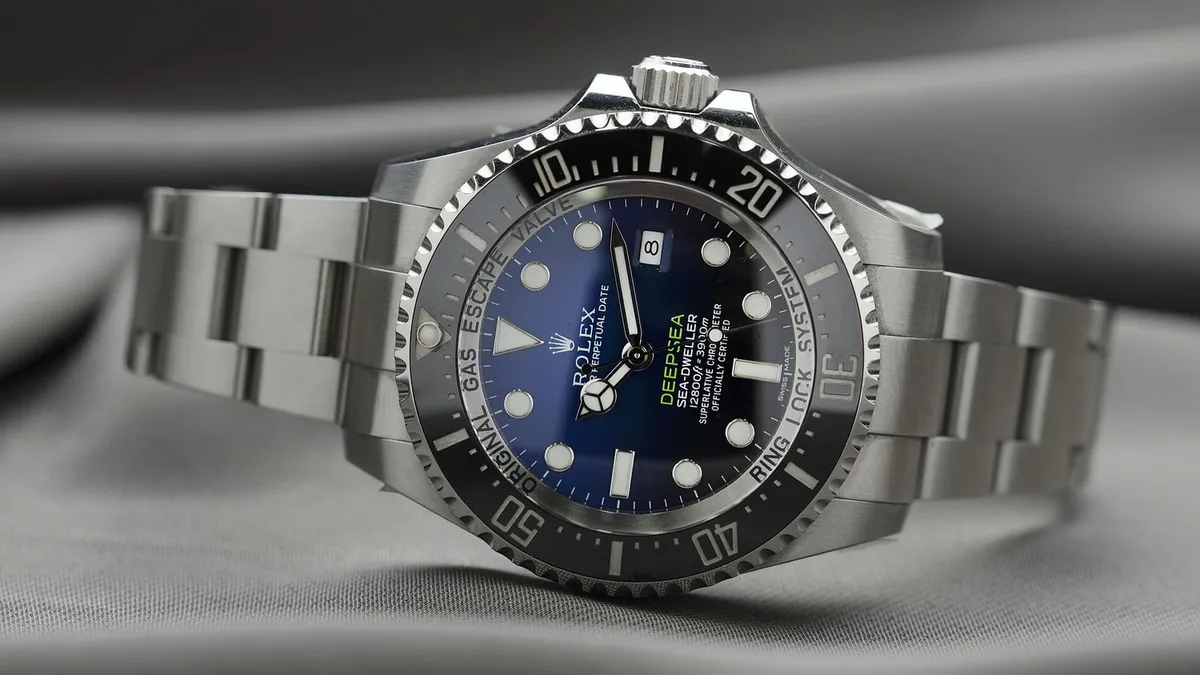
The metal of a watch determines how it wears, how it ages and how expensive it is to repair. Most of the differences that matter are visible only after a few years, which is exactly when the marketing language stops being helpful.
Stainless steel: grades and marketing terms
Almost every steel watch case is an austenitic stainless alloy. The common grades are 316L and, at the more expensive end, 904L-type alloys, and both are entirely sensible choices.
The higher-alloy grades resist corrosion and pitting better and take a higher polish, and they are harder to machine, which is why they cost more to produce. Whether that matters to you depends on how much time the watch spends near salt water and how much you value a slightly brighter finish.
“Surgical steel” is a marketing phrase rather than a standard. There is no certification body that awards it, and a case described that way may be any of the usual grades. Ask for the grade instead. Also worth knowing: steel can be welded and laser-refinished by a competent watchmaker, which makes deep dents repairable in a way that coated surfaces are not.
Titanium: light, dull and honest about scratches
Titanium is roughly half the weight of steel for the same volume, hypoallergenic, and resistant to corrosion. Grade 2 is commercially pure and softer; grade 5, an alloy with aluminium and vanadium, is harder and more commonly used for bracelets and clasps.
Titanium scratches more readily than steel and the scratches are more visible, because the metal underneath is the same colour as the surface but the texture changes. It also has a greyer, less brilliant appearance, which some people love and others never get used to. Coatings such as DLC or a hardened surface treatment reduce scratching but can chip at edges, and they cannot be polished out the way steel can.
Solid gold: purity, colour and softness
Precious metal cases are described by purity: 18k is three-quarters gold, 14k is just over half. Yellow, rose and white gold are the same metal with different alloy additions — copper for rose, palladium or nickel for white.
Gold is soft. It marks and picks up scratches easily, and a heavily polished gold case loses metal and edges over the years. White gold is frequently rhodium plated to make it look brighter and whiter, and that plating wears through in time, which means re-plating. Hallmarks are stamped or laser-etched into the case, and they are worth reading before purchase: they identify the assay office and the purity, and missing or inconsistent marks are a reason to slow down.
Platinum is denser and heavier than gold, resists scratching better in the sense that it displaces rather than removes metal, and develops a dull patina that can be polished back. It is significantly more expensive to machine and to repair.
Plated and coated finishes
Plating wraps a base metal in a thin layer of something else, usually gold or chrome, and PVD and DLC are applied as hard coatings in a vacuum process. Colour and hardness vary widely, and so does thickness, which is the specification that most often goes unstated.
Plating wears first at the places that rub: case edges, the underside of the buckle, the clasp, the tips of lugs, and wherever a bracelet flexes against the case. When it goes, the base metal shows through, and no polish will restore it — the only fix is re-plating.
If you are buying a plated watch, look at those contact points rather than the top of the case. A seller’s photograph taken face-on hides the exact evidence you need. Also ask directly whether the case is solid or plated, because a surprisingly large number of watches described as “gold” are not.
Ceramics, carbon and bronze
Ceramic bezels resist scratching and fading and can chip or shatter on impact; a chipped ceramic insert usually means replacement rather than repair, and matching a discontinued colour can be impossible. Carbon composite cases are light and warm to the touch, and repairs are limited. Bronze and brass develop a patina that many owners want and some hate, and bronze reacts with skin and sweat, occasionally leaving marks on clothing.
Bracelets, clasps and the parts nobody inspects
A bracelet is roughly a third of the wearing experience. Solid links do not rattle and hold their shape; folded links are lighter and cheaper and stretch over time. Screw-link construction allows resizing without damaging pins, and it is easy to check whether the screws have been chewed by a careless tool.
Look at the clasp the way you would look at the case. Thin stamped clasps bend; milled clasps hold up; the number of micro-adjustment positions decides whether you can get a good fit in summer and winter. A clasp that has been adjusted many times shows an elongated hole where the spring bar sits, and stretched links are visible as gaps in the bracelet when it hangs free.
Choosing by how you live
If you wear one watch every day and expect it to look the way it did when you bought it, steel with a brushed finish is the most forgiving choice, because brushed surfaces hide marks and can be refinished. Titanium suits anyone who dislikes weight and is willing to accept visible scratches. Solid precious metal is heavier, softer and easier to polish, which is both a feature and a reason it stays attractive to a resale market.
Avoid plated finishes on the parts that contact anything: buckles, clasps, case edges. Facings and bezels can wear plating gracefully; a clasp cannot.
Whatever you choose, ask two questions before you buy. What is the base metal under any coating, and can this surface be refinished if I scratch it? The answers separate a watch you can keep for decades from one you will replace.