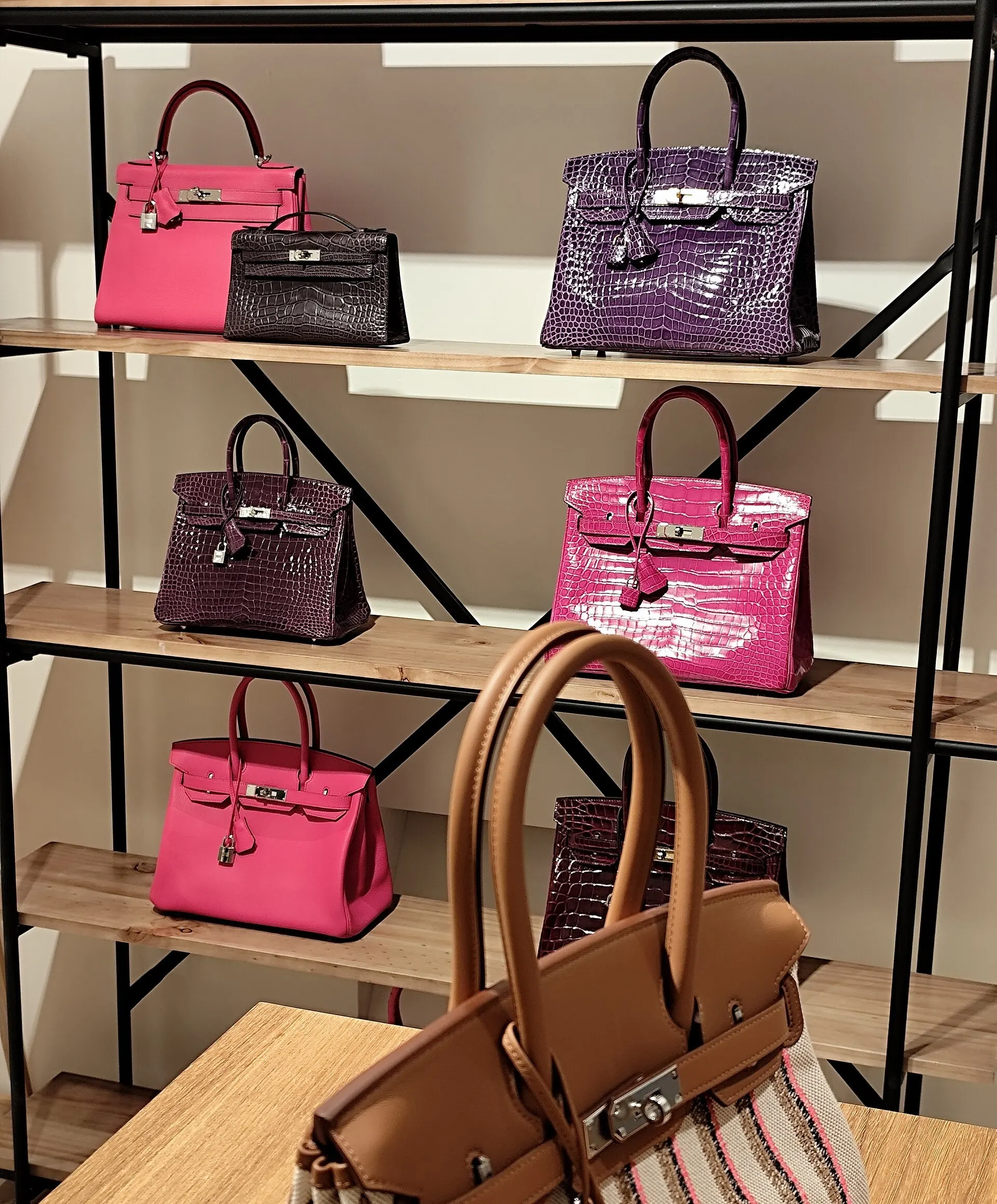
A handbag can look luxurious in a photo and disappoint after a month. The difference is usually construction: how the leather is chosen, seams anchored, edges finished and hardware attached. Quiet details, but they decide whether the bag keeps its shape, carries a sensible load and stays worth repairing.
Start with the shape
Before the leather, look at the bag empty and then loaded. Good structure supports itself without becoming a rigid box.
The base should be wide enough that the bag doesn’t tip when set down, but not so deep it’s heavy before anything goes in. Top handles should stand and recover after carrying. Shoulder straps should attach at points reinforced from inside, not at a single decorative stitch line.
Check the drop, the clear space between strap and bag top. A short top handle may not clear a coat; a long cross-body strap can land the bag awkwardly on the hip. Adjustable straps help, but the excess should be secured so it doesn’t curl or fray.
Read the leather honestly
Full-grain keeps the strongest layer of the hide and shows natural variation. It patinas and is often repairable, but it scratches and darkens. Top-grain is sanded for uniformity and usually coated; durable and easier to keep, but the finish wears first.
Patent and heavily coated leathers shine and shrug off water, but scuffs are hard to blend and the coating can crack where the bag flexes. Suede marks easily and needs protecting from rain and oil. Exotics add texture and scarcity, plus authentication, repair and cross-border paperwork.
Run a hand over the surface and look at it at an angle. Grain should look natural, not a repeating stamped pattern. The leather should be supple without being limp and recover slowly when pressed. Dry, papery or sticky leather will age badly.
Untreated vachetta, the pale trim on a Louis Vuitton Speedy, shows why this matters in money: an excellent Speedy 30 usually fetches $800–$1,250 used, while one with darkened or stained vachetta drops to $250–$550, per howmuchisitworth.app, Oct 2026.
Construction you can see
Stitching should be even, with no skipped stitches or loose ends. At stress points look for reinforced stitching, rivets or a folded, stitched leather tab. Handles should anchor through several layers, not just the lining.
Edge paint should be smooth and bonded. If it’s already lifting, water will get in and the peeling continues. Raw edges aren’t a fault in every design, but they should be cut cleanly and waxed or burnished where intended.
Piping should follow corners without puckering. Corners carry the most tension on a structured bag, so any gap between piping and panel grows with use.
Hardware and weight
Hardware may be solid brass, plated brass, plated zinc or steel. Solid brass patinas; plating looks bright at first and can flake once worn through. Check the clasp, feet, strap tips and zipper pull, the most-handled parts.
Zips should run without catching the lining. Magnetic closures should hold without dragging the leather out of shape. Feet protect the base only if set deep enough to stay put under load.
Weight isn’t quality. Heavy hardware and multiple linings can make a bag exhausting. Compare empty weight to size and picture it with a phone, wallet, keys and a bottle inside.
The lining tells a story
The inside is where money is often saved. A lining should be attached cleanly, without loose folds or exposed seams, and not so thin it tears at the zip. Suede and microfiber feel soft and quiet; smooth leather wipes clean but scratches.
Check pockets and interior seams. A slip pocket stitched only through thin lining tears before one anchored to a leather panel. A removable pouch is handy, but it shouldn’t be what holds the bag’s shape.
Proportion, color and daily use
Neutral colors are easier to repair, match and resell. Strong colors can be wonderful, but they narrow the market and make fading or color transfer obvious. Pale leather and dark denim are a bad pairing, especially on cross-body bags.
Size should follow contents, not trend. A small bag is useful only if it holds what you carry. A large tote needs a structured base, broad straps and an interior that stops everything sinking to the bottom.
Try it with the coat you wear most. Check the opening one-handed, the strap on your shoulder and handle clearance over a sleeve. A beautiful but awkward bag stays home.
Ask about repair before you need it
Find out whether the maker repairs linings, replaces hardware or refinishes edges, and whether outside repairs affect that. Keep the receipt, dust bag and authenticity details; they help provenance but don’t replace assessing the bag. If you’re unsure about a used bag, a third-party check such as Real Authentication starts at $30 (realauthentication.com, Oct 2026).
Buying used, inspect corners, handle attachments, edge paint, lining and hardware plating, in that order. That’s where wear turns into expense.
Spend on the parts that endure
The best bags aren’t necessarily the heaviest or most decorated. They use leather suited to the design, anchor hardware through reinforced layers and finish edges so the bag can be maintained. Find that at a size that fits your life, and the bag stays useful long after the season that launched it.