Counterfeits are built to pass the checks that buyers make. That is why the visible details of a copy are usually good and why authentication usually comes down to provenance, internal construction and the behaviour of the seller. Here is a workflow you can run yourself, in order of how much it actually tells you.
Start with provenance, not with details
Before looking at stitching or stamping, establish where the object came from. A complete chain — original purchase receipt, service records, name changes of ownership that make sense — is stronger evidence than any inspection of a surface detail.
Documentation should agree with itself. The serial or reference number on the object should match the paperwork, the paperwork should match the claimed age, and the model should match the description. Mismatches are usually carelessness, occasionally deception, and always worth asking about before money changes hands. When a seller has owned something for years and cannot produce a single record, that is not proof of anything, but it does mean you are relying entirely on inspection.
The inspection pass
Work through the object from the outside in, and keep magnification to hand.
Marks and typography. Engraving should be crisp, consistent in depth and correctly sized relative to the case or hardware. Look for shallower or fuzzier characters than surrounding marks, which suggests laser or acid etching applied later. Printed lettering on dials, lining stamps and heat-stamped logos should be sharp at the edges under a loupe rather than bleeding or slightly out of register.
Hallmarks on precious metal. Assay marks identify the standard and the office that tested the metal, and they are struck rather than printed. Missing, doubled or inconsistent hallmarks on gold and platinum are a serious warning. If you do not know how to read them, ask a jeweller to do it.
Hardware. Genuine hardware is solid and heavy for its size, with clean plating on the underside, smooth spring action and correctly machined screw slots. Copies tend to reveal themselves here: light-feeling metal, chrome-like plating, screws that are slightly off-centre, zips with stiff or wobbly pulls.
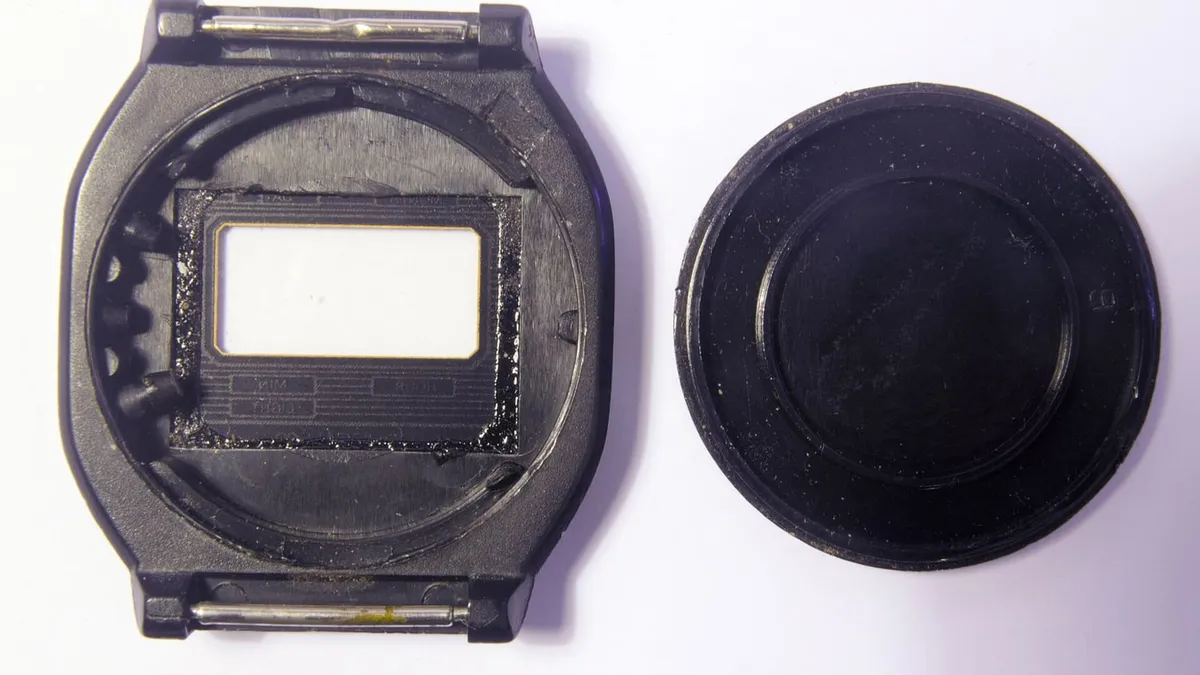
Stitching and construction. Stitch length should be even and consistent, with no skipped stitches or overlapping runs. Look inside the pockets, under the flap and along the underside of straps — the places that are not photographed. Cheap construction concentrates in exactly those hidden areas. On a watch, check inside the caseback: movement finish, rotor engraving and the condition of the gasket.
Materials. Leather with a plastic-like uniform sheen and a chemical smell is usually a coated split or a synthetic. Suede and lining materials are frequently substituted first.
Weight and balance in the hand. Fakes are often lighter, because the internal reinforcement, solid hardware and full-grain leather are the expensive parts. This is not a measurement, but it is a useful signal when combined with the others.
Behavioural checks: the seller tells you more than the object
A significant proportion of second-hand fraud is caught before the object is examined at all:
- The price is far below what genuine examples trade for, with a story explaining why.
- The seller will not allow an inspection by a third party, or insists the sale completes before any inspection.
- Payment is requested off-platform, by bank transfer, gift card or crypto.
- Photographs are inconsistent in setting, resolution or background, suggesting they were collected rather than taken.
- The seller cannot answer basic questions about the history, or the answers change.
- Pressure: someone else is about to buy it, the offer expires today.
Any one of these can have an innocent explanation. Two or three together is a reason to walk away, and there is always another example of the same thing elsewhere.
Verification you pay for
There is a limit to what you can establish alone, and it is worth knowing where it lies. An independent watchmaker can open a case, examine a movement and tell you whether the parts come from the same watch — a case or movement swap is one of the hardest problems to detect externally. A specialist leather or bag authenticator can assess materials, construction and hardware against known examples. Auction houses employ specialists who can look at an object before you bid.
Ask the maker’s service centre directly what verification they offer, because practice differs: some brands will inspect and service an item without commenting on authenticity, some keep service records tied to a serial number, and some will not return items they believe are counterfeit. Do not assume a particular policy applies to the brand you are buying.
Expect to pay for real verification, and treat a free “guarantee of authenticity” from an interested party as marketing rather than assessment.
A protocol that limits your risk
Buy with a return window that is longer than the inspection will take, and confirm that condition in writing before paying. Photograph or film the item as you unpack it, including the packaging, in case you need to dispute something. Pay by a method with a record and a dispute process, or use an escrow service for peer-to-peer sales. Budget for authentication and for a service, and treat those costs as part of the purchase price rather than as a surprise.
The honest summary is that you can rule things out yourself and you cannot rule them in. A cheap inspection is a filter; a paid professional assessment is the check. Plan your purchase around getting to the professional assessment while you can still cancel the sale.